Wooden vs. Metal Bed Frames: Which is Actually Sturdier?
There is a persistent myth in the furniture world that if you want a heavy-duty, unbreakable bed, you have to buy a metal frame. On paper, it makes sense: metal is stronger than wood, right? In reality, the high-street metal beds you find online are made from thin, hollow, tubular steel that bends, rusts, and squeaks relentlessly. If you are looking for the sturdiest bed frame in the UK, the answer is not a metal bed—it is a heavy-duty solid wood frame engineered with steel-to-steel machine joinery.
When a cheap wooden flat-pack bed breaks, it usually snaps spectacularly. The MDF splinters, the wood screws pull out, and the frame collapses. Because of this shared trauma, many buyers vow never to buy a wooden bed again and pivot straight to metal frames, assuming they are making a "buy it for life" upgrade.
Unfortunately, mass-market metal beds come with their own host of structural nightmares. Understanding how cheap metal frames are manufactured—and why solid timber is actually vastly superior at absorbing the weight of modern heavy mattresses—is the key to finally investing in a bed that will last a lifetime.

The Metal Bed Myth: Why Tubular Frames Fail
When you imagine a metal bed, you might picture solid iron bars forged in a foundry. However, unless you are spending several thousands of pounds on an antique cast-iron antique, modern retail metal beds are constructed from tubular steel or aluminium.
This means the metal is hollow, incredibly thin, and highly susceptible to structural failure in three main ways:
1. Bending and Buckling
Hollow metal tubes lack compressive strength. When you place a heavy modern hybrid mattress on a tubular metal frame and add the weight of two adults, the thin metal legs and centre support beams are placed under immense stress. If you sit heavily on the edge of the bed or shift your weight suddenly, those hollow legs can instantly buckle or bend permanently out of shape.
2. The Unbearable Squeaking
Metal beds are notorious for being the loudest beds on the market. This is due to metal-on-metal friction. Where the side rails meet the headboard, they are typically held together by basic bolts passing through thin metal brackets. As the bed sways naturally during sleep, these metal components grind against each other. Once a metal bed starts squeaking, it is almost impossible to permanently silence it without constantly re-tightening the joints or spraying them with WD-40.
3. Snapping Welds
To attach the decorative rungs or the slat supports to the main frame, manufacturers use cheap spot-welds. Under constant nightly tension, these brittle welds frequently snap, leaving you with rattling metal bars and a sagging mattress.
Why Mass-Market Wooden Beds Give Timber a Bad Name
If metal is hollow and squeaky, why do so many people think wood is weak?
The answer is fast furniture. High-street retailers have conditioned us to believe that "wooden beds" are made from MDF, particle board, or incredibly soft, cheap pine. Furthermore, they use standard metal wood screws driven directly into these soft materials. Over time, the screws strip the wood, the joints wobble, and the frame eventually collapses.
The problem isn't wood as a material; the problem is cheap materials and terrible joinery.
The Ultimate Solution: Solid Wood with Steel Joinery
To build the sturdiest bed frame possible, you have to combine the immense compressive strength of solid timber with the unbreakable mechanical locking power of steel.
At The Honest Plank, we don't force you to choose between a squeaky metal bed and a flimsy MDF frame. We engineer the best of both worlds in our Nottingham workshop.
Massive Compressive Strength
We handcraft our frames from thick, 100% FSC-certified Scandinavian Redwood. Unlike hollow metal tubes, solid Redwood is incredibly dense. It naturally absorbs and dissipates kinetic energy, meaning it can easily support over 500 kg of stationary weight without bowing or buckling.
Steel-to-Steel Joinery
We solve the "wobbly wooden bed" problem by completely eliminating standard wood screws on our load-bearing corners. Instead, we pre-embed heavy-duty steel cross-dowels deep inside the solid timber. When you assemble the bed, a thick steel machine bolt passes through the wood and threads directly into that steel dowel.
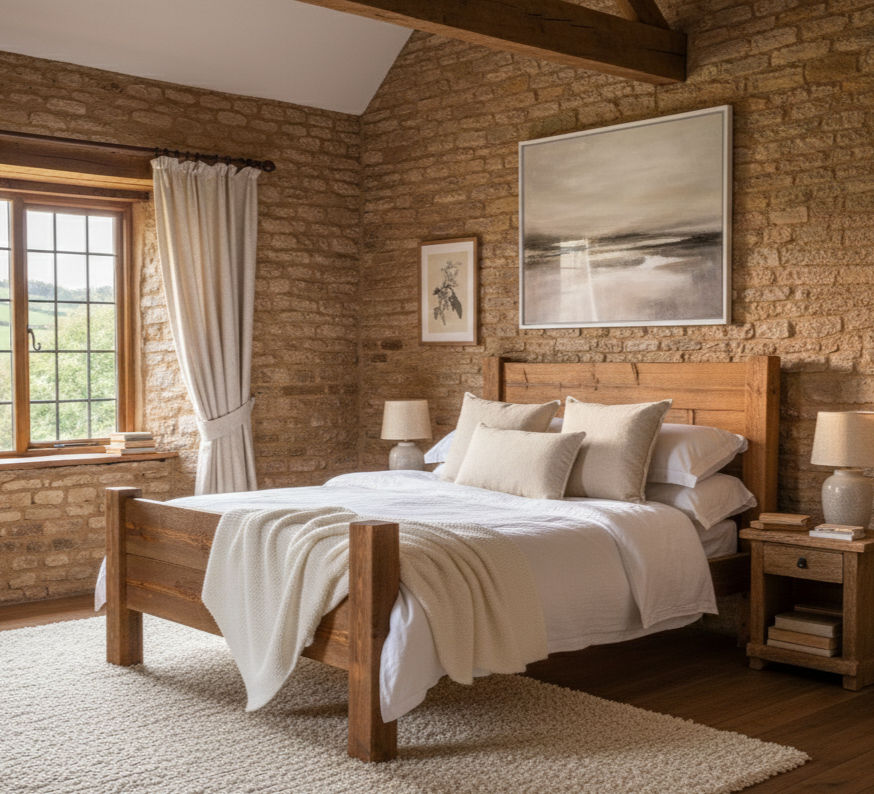
This creates a steel-to-steel connection hidden inside a solid wood frame. You get the unbreakable, rigid locking power of industrial steel, wrapped in the silent, beautiful, and warm aesthetic of natural workshop timber.
The Verdict: Metal vs. Solid Wood
Feature | Mass-Market Metal Beds | The Honest Plank Solid Wood |
Material Core | Hollow, thin tubular steel | Solid, dense Scandinavian Redwood |
Noise Level | High (metal-on-metal squeaking) | Silent (tightly clamped steel-to-steel joints) |
Weight Capacity | Prone to buckling under heavy mattresses | 500+ kg extreme capacity |
Repairability | Snapped welds cannot be fixed at home | Scratches easily buffed out with natural wax |
Aesthetic | Often cold and industrial | Warm, natural grain and minimalist design |
If you want a bed that will never sway, squeak, or collapse, step away from the hollow metal tubes. Explore our collection of [heavy-duty solid wood bed frames] and experience the lifetime durability of genuine workshop engineering.
Frequently Asked Questions
Are metal bed frames sturdier than wood?
Not usually. While solid cast iron is very strong, the vast majority of modern metal beds are made from cheap, hollow tubular steel that easily bends and buckles under the weight of heavy modern mattresses. A bed frame made from thick, solid wood with proper joinery is significantly sturdier and boasts a much higher weight capacity.
Do metal beds squeak more than wooden beds?
Yes, metal beds are highly prone to squeaking due to metal-on-metal friction at the joints. While poorly made flat-pack wooden beds can also squeak when their screws loosen, a high-quality solid wood bed that utilizes steel-to-steel machine joinery will remain completely silent.
What is the sturdiest type of bed frame?
The sturdiest type of bed frame is a solid wood platform bed that utilizes a thick central support beam, rigid solid wood slats, and heavy-duty steel machine bolts for its corner joints. This combination provides the high weight capacity of dense timber and the rigid, unbreakable locking power of steel.


Comments